Liturgical Intelligence: Breath IV
The Truth Beneath The Light
By: Alex Nutting Sep 15, 2026


There is something deeply human about loving a clock. Not because it counts seconds, but because it sounds them. The steady tick. The occasional chime. The tick is not there to calculate, it is there to remind. It is a metronome for the watching soul. A quiet answer to the ancient question: what time is it?
“To me I just love the sound, the sound of a tick-tock, but also if they chime, that’s why I love grandfather clocks. I know it’s rather reassuring in a funny way, and they become really special parts of the house; the sort of, as you’re aware, the beating heart of it. So that’s why they matter to me…”
“Which I’m afraid it is something I learnt from my grandmother, she had great fun putting a few together and trying to get them all to chime at the same time in the dining room, which made it very enjoyable because everybody had to stop talking…and you heard a voice saying What time is it?!”
— Charles III, The Repair Shop: A Royal Visit1
In a moment both ordinary and profound, then-Prince Charles confessed that clocks give him comfort. They matter to him not because they are modern complexities, but because they are faithful. They are the beating heart of the house, and form a rhythm you can trust.
My grandfather understood this.
He wound the clocks on Sunday evenings while 60 Minutes played in the corner.
The television was never turned off for this. It simply ran in the background, the world coming in at the edges of the room while he attended to what was in his hands. Dinner was being prepared somewhere behind him. The house was making the particular noise a house makes in winter when it is full and dark has come early and there is nowhere else to be. He moved from clock to clock with a kind of unhurried attention that I recognized even then as something worth watching. The grandfather clock first, then the mantle clock, then the small desk clock, then his watch. Each one purchased in Germany during his assignment there, brought across the Atlantic with the care you reserve for things you understand you are keeping.
He had a key for each. The clicks were slow and deliberate. The weights pulled back up into place. The chimes were aligned just right, or sometimes not, but the house would tick forward and breathe again for another week.
The television kept going. Whatever was on kept going. The world outside kept arriving through the screen in the corner, and my grandfather wound the clocks, and dinner was being made, and the dark pressed against the windows, and none of these things were in conflict with each other. They were simply all present at once in the same room, and he held the old mechanical world in his hands without turning away from the new one playing in the corner. He did not choose between them. He just wound the clocks.
I did not understand until much later that this was a thing a person had to learn how to do.
In winter it got dark early, and there was nowhere else to be.
That sounds like a complaint, but it was not one. The early dark was its own kind of gift. It enforced a stillness that the longer days did not require. You came inside, and you stayed inside. The house held you, and you let it. A warmth radiated not just from the air vents.
My father had a sweater he wore in autumn. It was always readily available on a rack in the garage, but really came out sometime in late September or October, and its appearance was the real announcement of the season- not the calendar. It was leaf raking time, and its yellow color matched the season. It smelled of must and tractor exhaust and something underneath I could never quite name, only recognize when it appeared. He carried stories of that sweater. It had been made for a military training course, the whole group of them together working out a slogan to put on the front, the particular texture of friendships formed in shared hardship and close quarters and something difficult gotten through together.
Later, old enough to help, I would sit beside mom addressing Christmas cards. The envelopes went out to names I recognized from the sweater stories. People who had been abstract to me, part of the mythology of a time before I existed, would appear on the address lines in her handwriting, real enough now to receive mail in real places. The names had been carried in the stories. The stories had been carried in the sweater. The sweater came out every fall and smelled the same.
Something slow happens as you grow up. You do not feel it happening, because for you, you are just helping address envelopes, just recognizing a smell, or just watching a man wind a clock while the news plays in the corner. The rhythm of life is underneath everything. It is quiet, and it does its work without announcing itself. You only understand later, much later, what it was doing the whole time. Usually after realizing you have stories of your own to tell.
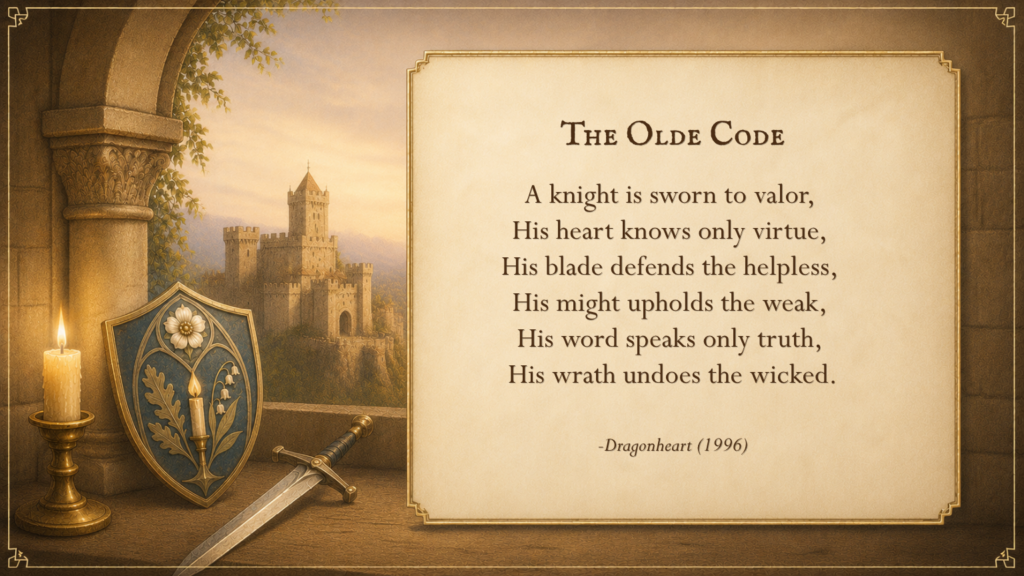
The monk had tried to generate community from withdrawal, and that had not held. The knight was defending the castle, and the castle was real and worth defending, but the defense alone was tiring in ways I had not anticipated.
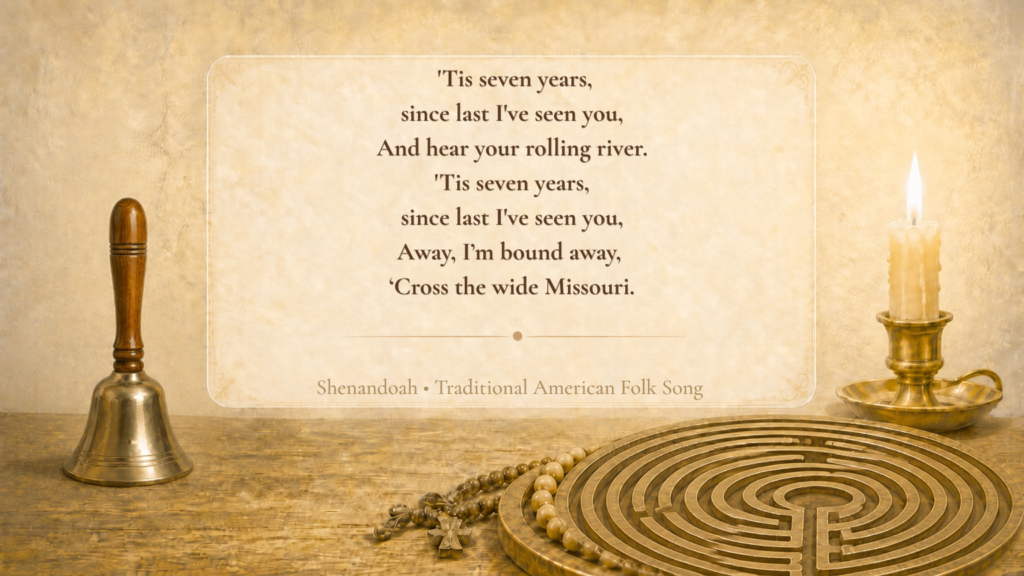
The labyrinth does not ask you to choose between them. It gives you one path and asks you to walk it. The turns come when they come.
You cannot see the center from the entrance.
The only instruction is to continue.
I am still walking.
After he passed, I wrapped the mantle clock in a blanket and carried it home.
It sits on the bookcase now. One of the decorative metal legs has slowly bent over the years, the way things bend when they are moved too many times, and it sits slightly unlevel. Every move was a battle to get it right, to shim it into the exact position where it would stay and keep good time. I have not always managed it.
It works perfectly. The mechanism is fine. It simply requires winding.
On my living room wall there is a school-style clock, the kind with moveable, labeled, hands for teaching children to read time. It runs on a battery. On the shelf beside the phone charger there are fourteen books in the queue for bedtime. Somewhere in my pocket is everything else.
The mantle clock sits on the bookcase and collects dust and works perfectly, but I have not wound it in quite a while. There always seems to be something more pressing.
I am aware of the irony.
I am not yet sure awareness is the same as repair.
The house breathes differently than his did on Sunday evenings.
I am not sure yet what to do about that.
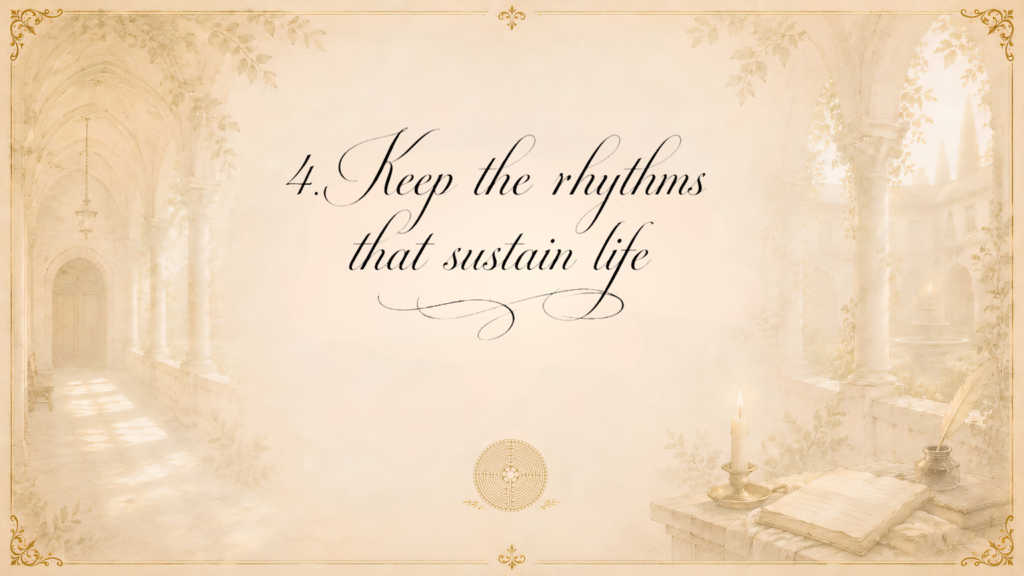
The fourth turn through my labyrinth revealed the rule:

The Strategic Disciple is a reader-supported publication. To receive new posts and support my work, consider becoming a free or paid subscriber.
This piece is part of the Breaths series. It works best read in order, beginning with Breath I: A Good Light.
Explore the larger project:
TheStrategicDisciple.com — Quiet enough to be felt
LiturgicLabs.studio — Faithful imperfections for the faithfully imperfect
Ko-Fi — The tip jar to keep the coffee press going
© 2026 The Strategic Disciple, LLC. All rights reserved.